

KitiRin Jewelry เริ่มต้นมาจากการซื้อพลอยดิบจากเหมืองพลอย
และมีการพัฒนาและขยายกิจการออกไป จนกระทั่งสามารถส่งออกอัญมณีน้ำงามจากกาญจนบุรีไปให้คนทั่วโลกได้รู้จักดังเช่นปัจจุบัน
จุดเริ่มต้นของอัญมณีเมืองกาญจน์เกิดขึ้นเมื่อประมาณ 50 ปีที่แล้ว โดยในบริเวณที่เป็นอำเภอบ่อพลอยในปัจจุบันนี้เคยเป็นพื้นที่ภูเขาไฟมาก่อน แล้วในบริเวณนี้ก็มีชาวบ้านพบหินสีต่างๆ เป็นจำนวนมากทั้งตามแหล่งน้ำและเชิงเขา ต่อมาข่าวการค้นพบหินสีนี้แพร่กระจายออกไป ทำให้มีนักแสวงโชคจำนวนมากหลั่งไหลเข้ามาที่บ้านบ่อพลอย จนในที่สุดก็ได้มีการยกฐานะบ้านบ่อพลอยขึ้นเป็นอำเภอบ่อพลอย
เหมืองพลอยในสมัยแรกนั้นใช้แรงงานคนในการขุด แล้วนำหินสีที่ได้ขึ้นมาทำการคัดเลือกที่บริเวณปากหลุม หากเป็นบริเวณภูเขาหรือเชิงเขาจะพบหินสีได้ง่าย ไม่ต้องขุดลกมากนัก แต่ถ้าหากเป็นบริเวณพื้นราบต้องขุดลึกลงไป ประมาณ 12 เมตร จึงจะพบกับสายแร่พลอย แต่ในปัจจุบันได้เปลี่ยนจากแรงงานคนมาใช้รถตกดินขุดขึ้นแทน จากนั้นจึงใช้น้ำฉีดแล้วนำมคัดคุณภาพอีกครั้งหนึ่ง พลอยที่ขุดขึ้นมาได้ในตอนแรกนั้นจะเป็นสีเทา จากนั้นจึงนำมาเผาเพื่อให้เกิดสีต่างๆ ตามแต่เชื้อที่มีอยู่ เมื่อผ่านการเผาให้เกิดสีแล้วจึงนำไปเจียระไนให้เป็นรูปทรงต่างๆตามที่ต้องการ
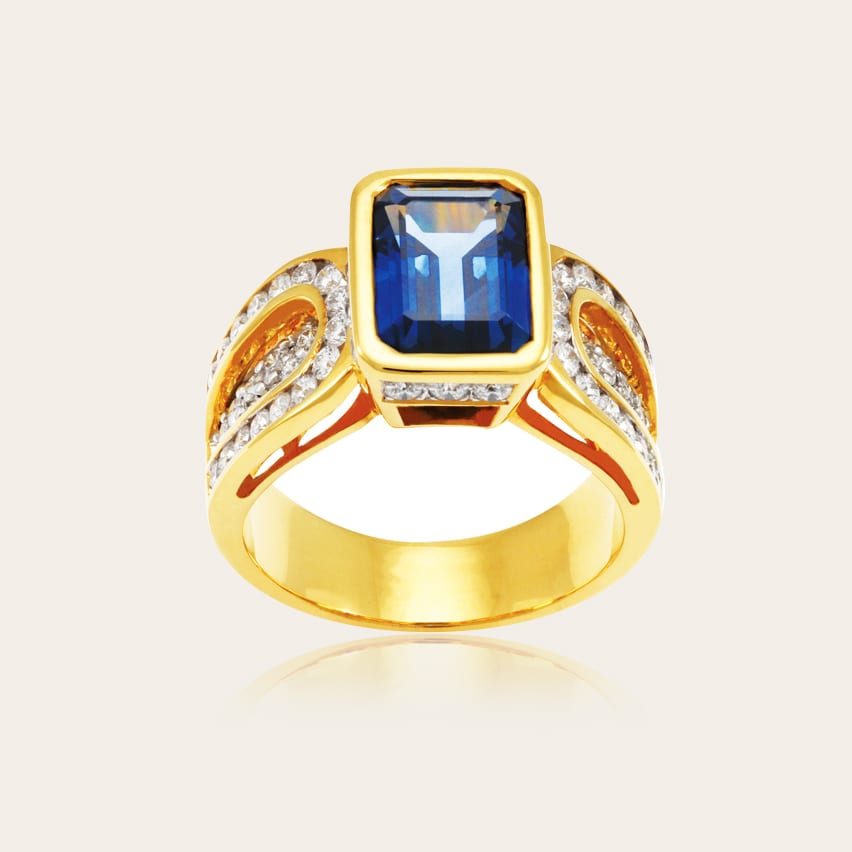
เอกลักษณ์ของอัญมณีเมืองกาญจน์ อัญมณีในจังหวัดกาญจนบุรีนั้นที่พบมากมี 2 ประเภท คือ อัญมณีสีน้ำเงิน หรือที่เรียกกันว่า “ไพลิน” และอัญมณีสีดำหรือที่เรียกกันว่า “นิล”
ไพลินหรืออัญมณีสีน้ำเงินนั้นจัดเป็นพลอยเนื้อแข็ง วัดค่าโดยใช้มาตรฐานของ Mohs หรือที่เรียกกันว่า Mohs Scale โดยวัดค่าความแข็งเริ่มจากเลข 1-10 ไพลินนั้นจะมีความแข็ง 9 Mohs ซึ่งมีความแข็งรองลงมาจาก เพชรที่มีความแข็งที่สุดที่ 10 Mohs ในประเทศไทยนั้นสามารถพบพลอยไพลินได้มากที่สุดที่อำเภอบ่อพลอย จังหวัด กาญจนบุรี ส่วนในจังหวัดอื่นแทบจะพบไพลินได้น้อยมาก จึงทำให้อัญมณีสีน้ำเงินนี้กลายเป็นสัญลักษณ์อย่างหนึ่งของจังหวัดกาญจนบุรี
นิลหรืออัญมณีสีดำนั้นจัดเป็นพลอยเนื้ออ่อน ไม่โปร่งแสง มีความแข็งประมาณ 7 Mohs นิลของจังหวัดกาญจนบุรีขึ้นชื่อเรื่องสีที่มีความดำสนิทและไม่มีสีอื่นเจือปน นอกจากจะมีการนำนิลมาทำเป็นเครื่องประดับ ต่างๆแล้ว ในปัจจุบันยังมีการนำนิลที่ถือว่าเป็นพลอยเนื้ออ่นนั้นมาแปรรูป โดยการบดนิลให้เป็นผงแล้วนำไปอัดเป็นรูปทรงต่างๆ อย่างเช่น พระพุทธรูป เป็นต้น
การเลือกซื้อ
การเลือกซื้อไพลินควรพิจารณาจาก
1. สี ไพลินควรมีสีน้ำเงินเข้ม สีสด ไม่อมดำ
2. น้ำ หมายถึง เนื้อของอัญมณีควรมีลักษณะมันวาว มีความฉ่ำคล้ายมีน้ำอยู่ข้างใน
3. ความสะอาดหรือความใส อัญมณีนั้นเกิดจากธรรมชาติ จึงมีตำหนิที่เกิดจากธรรมชาติเช่นกัน ยิ่งมีตำหนิน้อย คุณภาพยิ่งดี
4. ความเป็นประกายหรือไฟ คือ แสงสะท้อนที่มาจากอัญมณีเมื่อนำมาส่องกับไฟ
5. รูปทรง อัญมณีนั้นสามารถเจียระไนให้มีรูปทรงแบบต่างๆ ได้ตามที่ต้องการ โดยเจียระไนต้องมีเหลี่ยมที่คมชัด
6. น้ำหนักของอัญมณี คิดเป็นกะรัต ยิ่งน้ำหนักมาก ราคายิ่งสูง นอกจากนี้ยังควรซื้ออัญมณีจากร้านที่มีใบรับรองเพื่อความแน่ใจว่าจะได้อัญมณีแท้ โดยในใบรับรองจะระบุรายละเอียดของอัญมณี เช่น ชนิด ความกว้าง ความหนา รูปร่าง น้ำหนัก เป็นต้น
ส่วนการเลือกซื้อนิลนั้นควรเลือกนิลที่มีสีดำสนิท ไม่มีสีอื่นเจือปน เนื้อของนิลต้องมีความเนียนและมันวาว มีลักษณะทึบแสง ต้องมีน้ำหนัก มีการเจียระไนที่มีเหลี่ยมคมชัด สวยงาม ปัจจุบันมีการทำนิลปลอมโดยใช้พลาสติก
การดูแลรักษา
1. ควรเก็บอัญมณีแยกชิ้นกัน เพราะอัญมณีแต่ละชนิดมีความแข็งไม่เท่ากัน เมื่อเก็บรวมกันอาจจะเกิดรอยขูดขีดได้
2. ทำความสะอาดอัญมณีด้วยน้ำยาล้างอัญมณีหรือสบู่เหลวผสมกับน้ำธรรมดา แล้วเช็ดด้วยผ้าอ่อนนุ่ม
3. ห้ามล้างด้วยน้ำร้อน เพราะความร้อนจะทำให้น้ำที่แทรกอยู่ในเนื้อพลอยระเหยออกไป ทำให้ผิวของพลอยลดความมันวาวลง
4. ห้ามเก็บรักษาอัญมณีด้วยการแช่ในน้ำมัน เพราะจะทำให้ฝุ่นละอองเกาะได้ง่าย เมื่อเช็ดด้วยผ้าจะทำให้ผิวของอัญมณีเกิดรอยได้ง่ายเช่นกัน